Nov 15, 2008

Ramsey County Tax and Budget Meeting

The following information is copied from the Ramsey County Truth in Taxation site:

Ramsey County Tax and Budget Meeting
Arlington High School Great Room
1495 Rice Street
St. Paul, MN
December 11, 2008 - 6:00 p.m.This is a combined public meeting of your county commissioners, school board, city council, and metropolitan special taxing districts to discuss proposed 2009 budgets and proposed 2009 property taxes. You are invited to attend these meetings to express your opinions.Ramsey County property appraisers will be available for individual market value consultations in adjacent rooms beginning at 5:30 p.m.Interpreters will be available for deaf/hard-hearing, and also for Spanish and Hmong speaking participants. Handicapped accessibility will be provided.

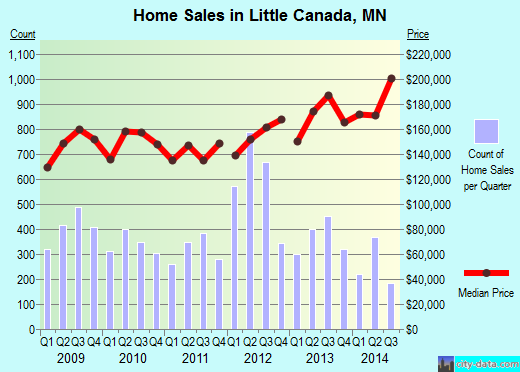
The above chart is a look at what has happened to Little Canada property values and home sales in the past year.

For example, according to my Ramsey County Property Records and Revenue statement, my home's "Taxable Market Value" fell 5.4%. Obviously, this is significantly more optimistic than actual home sales reflects (-22%), according to the city-data.com information (which is based on actual home sales not anticipated tax revenues. You'll note that sales has dropped off dramatically in the last year, too. Even the $140,000 average sale price is questionable, since so few houses have been sold (even though there are many more houses for sale in the city than there were in 2007).

So, I'll be meeting with an appraiser on December 11th to argue my home's Taxable Market Value down to a more realistic value. I recommend you do the same. There is no point in paying taxes on imaginary evaluations and this is money that belongs in your pocket, not the state, county, or city's.

Oct 9, 2008

10-8-2008 Little Canada City Council Meeting

Tonight, one of the last items on the City Council’s agenda was Savage Lake water quality. Before the meeting, Joel Hansen dropped a packet off at many Savage Lake homes describing the history of the lake, some of the problems, and the options available to the city and residents. One of the suggested remedies for the lake has been rain water gardens. Residents were asked to bring a signed copy of an approval form if there is interest in installing rain water gardens on Savage Lake yards.

Joel summarized the recommendations of the city, the Watershed District, and residents. The Watershed District’s measurements stated that the “100 year flood” level and their estimation of the current lake level would not allow for an further change in the lake level. The DNR has allowed for chemical irradiation of up to 5 acres of water lilies on the west Savage Lake. There is some discussion still left regarding the weir design and height.

Joel discussed recommendations for a different street sweeping system to pick up more of the “fine particulate” material from the streets. That involves a $200k purchase of equipment, which members of the council (especially the Mayor) balked at. They discussed cost sharing the equipment with another community.

I asked that the city look into containing the runoff from the freeway into the east side of the lake. Joel admitted he hadn’t included that in the summary, but he was working on that issue. In retrospect, I realized that the freeway runoff should be the responsibility of the state, particularly DOT. I offered to obtain pictures of the sediment traps used at the Shakopee Arboretum to provide to Joel as a design possibility.

Joel will call for a neighborhood meeting to discuss and describe the remedies for the lake. October 20th, at 7PM is the proposed meeting date.

From the city's meeting notes:

SAVAGE LAKE WATER QUALITY ISSUES
The City Administrator reviewed his October 3, 2008 report on the Savage Lake water quality action plan which was directed last summer after a neighborhood meeting held by the Watershed and City staff.

The Administrator reported that the first action plan task dealt with lake level. The Administrator indicated that research has been done and some conflicting information found, however, it appears that the lake level has always been very close to the current outlet level of 895.1. The Administrator noted that the Watershed has conducted an elevation survey of nine homes around East and West Savage Lakes that appeared to have the lowest elevations as compared to the lake level. The results of this analysis is that the 100-year flood elevation is only .2 feet above the low entry elevation of the shop garage at 334 Little Canada Road. Based upon Watershed rules, they cannot support any increase in the normal elevation as that would increase the 100-year flood elevation. Given the elevation of the lowest structures, that would put them in the 100-year flood plain. The Administrator reported that one possible modification was suggested by Little Canada resident Tom Wenzel, a senior water resource engineer with the MN Board of Water and Soil Resources. He suggested modifications to the hydraulics of the new structure to better match those of the former culvert. This would slow down the removal of flood waters, thus resulting in more flood detention, increased residence time, periodic increases in flood elevations, and hopefully have some impact on how much the lake drops below the current elevation as the summer progresses. The Administrator reported that the Watershed will be evaluating this option.

The second task was to determine the feasibility of eradicating lily pads. The Administrator reported that he has met with Mr. Neil Vanderbosch, Aquatic Plant Management Specialist with the DNR, who indicated that a full eradication will not happen. The Administrator indicated that Mr. Vanderbosch will be revising the plan he previously prepared to indicate the level of eradication that will be acceptable. He has indicated that a maximum eradication of 5 acres is acceptable for large bodies of water, and has suggested that 3.5 acres may be the most that will be approved for West Savage Lake. The Administrator reported that it is an expensive undertaking to contract for eradication. The Administrator suggested an economical option would be for the City pay the cost of the chemical if there are residents on the lake willing to apply it.

Blesener asked for clarification on the outlet weir (normal level). The City Administrator noted the correspondence from the Watershed indicating that the top of the weir is 895.4, which was raised from 895.1 in 2006 to compensate for the tip in the outlet pipe. The Administrator noted the need for the DNR to modify their information to correspond with the 895.4 level. Blesener pointed out that the 100-year flood elevation is only two to three inches below the Smith’s garage floor elevation.

The Administrator reviewed task 3 for dredging the wetland at Jackson and Demont. The City Engineer will have plans and specs ready for this work by the end of the month to be completed over the winter. He will include alternates for the sediment plumes in areas of Savage Lake noting that access to these areas will be difficult.

Task 4 relative to evaluation/installation of storm water improvements. The Administrator noted that the installation of rain water gardens in the Savage Lake drainage area is the most reasonable option. Surveys were recently mailed to property owners in the drainage area to determine the level of interest. Survey information is due by October 15th. The Administrator indicated that the plan would be to have these rain water gardens installed next summer.

Task 5 calls for the evaluation of a street sweeper purchase. The Administrator reviewed the two types of sweepers, noting that the regenerative air sweeper is favored by the Watershed as it picks up the fine particulates which carry the most contamination. The cost of a regular sweeper is estimated at $140,000 versus $200,000 for the regenerative air sweeper. The Administrator indicated that the Watershed has been approached relative to funding a portion of this cost as a demonstration project. The Administrator also indicated that the cost of this equipment could be included in the City’s Capital Improvement Budget or funded with LGA dollars depending on the level of future LGA funds. Blesener suggested that another option would be a joint purchase with another city, and suggested that City staff explore this option. The City Administrator indicated that staff is currently discussing a shared sweeper with neighboring cities. The City Administrator indicated that should a sweeper be purchased, the goal would be to hire a retired individual to operate the sweeper on an as-needed basis. With the purchase of a sweeper, the City’s streets could be swept more frequently, thus improving water quality, appearance, etc.

Task 6 calls for the evaluation of pre-wetted salt spreading. The City Administrator indicated that this task is still being evaluated.

Tom Day, Lakeshore Avenue resident, stated that he appreciates the work that the City is doing with regard to Savage Lake water quality. He indicated that there are two additional issues that need study. The first is the freeway run-off coming to West Savage Lake and the fact that the drainage pipe is full. The City Administrator indicated that staff would check on this issue. The second issue is the drainage from the north side, and Day suggested the installation of sediment traps. Day indicated that he would obtain some pictures of these traps.

The City Administrator suggested that the next step would be to call for a neighborhood meeting to review study progress with the neighborhood.

Mr. Blesener introduced the following resolution and moved its adoption:

RESOLUTION NO. 2008-10-250 – SCHEDULING A NEIGHBORHOOD MEETING FOR MONDAY, OCTOBER 20, 2008 AT 7:00 P.M. TO REVIEW THE SAVAGE LAKE ACTION PLAN UPDATE

The foregoing resolution was duly seconded by Montour.
Ayes (4).
Nays (0). Resolution declared adopted.
Jul 7, 2008

I received a very positive response from our local state Representative, Bev Scalze (rep.bev.scalze@house.mn), regarding our trials in getting the lake levels and contamination problems resolved. She has contacted the DNR regarding our concerns and is working with DNR officials. She commented that "Since there is a mention of the State setting the water levels and the fact that legislation may be needed, I see a need for me to be involved in an issue that I had hoped would be addressed by the Watershed District and the City."

This is a ray of hope in an otherwise depressing trend of events for Savage Lake shore property owners. Please contact her to thank her for her involvement and assistance.

http://savagelake.blogspot.com/

Jul 1, 2008

June 25, 2008 City Council Meeting

The following is an exerpt from the city council's meeting notes. Obviously, some things are dramatically less detailed than what was presented in the meeting. A couple of things stand out from these meeting notes and past statements lake shore owners have heard:

1) The DNR and the Watershed District do not use science, historical records, or justifiable information in making decisions on issues like lake levels. A "finger in the wind" appears to be sufficient information for their pronouncements. If the DNR is the ultimate arbitrator of the lake level and they are not competent to perform that task, it appears that the city and state is practically daring property owners to challenge their decisions in court.

2) However, the buck is constantly being passed in this regard. The "lake," according to the council and the Watershed District, is not a lake, but a watershed. The DNR passes the buck back to the Watershed District, they pass it back to the DNR, and the city pretends their hands are washed of all responsibility.

3) The city is not aggressively investigating or monitoring lake pollution, if they have to be shown pictures of trash, clippings, and old tires before they decide to act on a citizen's complaint of business pollution in the city's lakes.

4) Claims such as "the Public Works Department’s use of salt and eliminating sand usage, coupled with better sweeping practices would go a long way toward water quality improvements" perfectly describes how little the city administration understands the concept of "water quality."


SAVAGE LAKE MEETING RECAP


McGraw recapped the Savage Lake meeting that was held on Tuesday, June 17, 2008 with residents in the Savage Lake drainage area. He noted that Cliff Aichinger, Ramsey-Washington Metro Watershed District did a very good job of presenting a lot of information. McGraw felt that the biggest issues the neighbors have are the high water mark for Savage Lake, how and when it was set, its impact on the lake, and the water lilies that have taken over the west side of the lake. McGraw indicated that most of the neighbors present want the water level raised and want the water lilies gone.

McGraw reported that Aichinger gave the property owners some encouragement on how to accomplish both through the DNR. Aichinger indicated that if that avenue was not successful, the City’s legislative representatives would need to get involved. McGraw pointed out that the treatment of the water lilies would be at the property owners’ expense. While the DNR has approved some treatment of the water lilies, McGraw felt that more was warranted given that there had never been water lilies on West Savage Lake in the past.

Blesener noted that Aichinger made it clear that Savage Lake is classified as a wetland and not a lake.

McGraw further reported that the Watershed does not test water quality of wetlands. However, they have done testing of Savage Lake and committed to continue to do testing. The result of the testing is that Savage Lake is not polluted.

McGraw reported that the issue of the School District dumping into the wetland system. It was determined that latex field paint was being dumped, which is not hazardous. The School District has been informed to cease this practice or they will be fined.

With regard to water quality, McGraw reported that discussions focused on treatment with the City Engineer recommending that rain water gardens be installed in the Savage Lake drainage area to provide treatment. It would not be possible to put a rain water garden at the end of the culvert that runs directly into the lake near the Day property, however. The City Engineer indicated that he would work with property owners in this drainage area to determine the level of interest in both having the gardens in yards as well as maintenance of the gardens. With regard to the culvert, it may be possible to install a system for collecting trash and debris before it gets into Savage Lake. This would have to be cleaned frequently to prevent blockage and flooding.

The City Administrator indicated that there are still roles that the City can plan relative to concerns about Savage Lake. He noted that the City is trying to get good historical information on the lake level. He pointed out that many people who live on Savage Lake have been there for many years and can provide information. The Administrator also pointed out the Watershed’s willingness to contact the DNR to request a re-evaluation of the ordinary high water mark. The Administrator noted that before an adjustment in that level would be possible, it is likely that a flood study will need to be done to determine if there would be any negative impacts as a result of higher water levels. He pointed out that one property owner on East Savage expressed opposition to having the water level raised. With regard to water lilies, the Watershed has indicated it will assist in working with the DNR on a more extensive eradication plan. The Administrator noted that the Watershed has indicated that property owners can request their Board to provide funding to help defray the costs.

McGraw felt that the property owners had a legitimate argument for the removal of the water lilies from Savage Lake given that at one time there were none on the lake. McGraw felt that if the property owners and the Watershed presented the information in an organized fashion, the argument for total removal of the water lilies would be stronger.

Keis asked about the street sweeping discussion, and asked if the City can justify the cost of a sweeper. The City Administrator felt the issue was not one of economic payback to the City, but rather issues of aesthetics and water quality. He noted that cities typically sweep three times per year. Little Canada has been sweeping only once per year, given timing issues with fall sweepings. The Administrator felt that the purchase of a sweeper should be looked into, noting that the City will get some additional LGA funds that could be used for the purchase. There are additional issues related to operating costs, and the Administrator suggested it may be possible to hire a person part-time to do sweeping. The other issue is what to do with the materials that are swept up. Under the contracting arrangement, the contractor must dispose of this material.

The Administrator felt that the Public Works Department’s use of salt and eliminating sand usage, coupled with better sweeping practices would go a long way toward water quality improvements. Additionally the installation of rain water gardens and collection of trash at catch basins will help the lakes. Further, the Watershed has indicated their assistance with the DNR relative to the Savage Lake water level and water lily eradication.

Montour felt that a lot of good things came out of the neighborhood meeting. He suggested that an action plan be put together so that it is clear who owns which tasks and establishes a timeline for when action items will be addressed. McGraw stated that it is his understanding that a Savage Lake Homeowners Association will be formed, which would take on tasks at hand with the assistance of the Watershed and the City.

The City Administrator indicated that he could put together an action plan, but noted that there will be a lot of variables depending on DNR reaction to raising the ordinary high water mark for Savage Lake as well as additional water lily removal. If the DNR does not support these actions, legislative action will be needed. Montour indicated that having a document outlining the action steps and responsibilities would be helpful.

Elvy Day, Lakeshore Avenue, indicated that it will take the cooperation of all parties working together to move forward on the issues. She thanked the City for any help they would provide.

Blesener pointed out that a lot will depend on the DNR, and it could be that they will not be supportive of raising the ordinary high water level or additional water lily removal. Day pointed out that there are other environmental groups that could be solicited for help.

Rocky Waite, Lakeshore Avenue, appeared before the Council to clarify a few issues from the last meetings. He indicated that when he brought the issue of the School District’s dumping into the storm sewer system, it was not latex field paint that he noticed, but another substance which appeared to be anti-freeze. The City Administrator indicated that the City did contact the School District on the occasions that Mr. Waite reported the dumping, but the substance was not tested. He further reported that the Watershed has contacted the School District to cease this practice, or they will be fined.

With regard to the Gopher Electronics property, Waite showed pictures of existing conditions. He indicated that the original building plans for this site call for a sediment pond, and noted that the pond has not existed for a number of years. The City Administrator reported that the pond was originally put in but has eroded out. He has talked to the property owner and is trying to get voluntary cooperation to clean up and repair this pond.

Waite pointed out that at the May 28th meeting Council Member Montour indicated that Gopher Electronics was not dumping into Savage Lake. Montour indicated that what he said was that Gopher Electronics was not dumping pollutants into the lake.

Waite presented pictures showing discarded old tires on the Gopher Electronics property as well as broken concrete and asphalt near the lake edge. He also showed piles of leaves dumped on this property. Waite contended that these materials would be considered pollutants. Waite indicated that he wanted to show that he did have documentation for the issues that he raised relative to Savage Lake.

Blesener indicated that the City will contact Gopher Electronics and request that they clean up their property.

Waite reported that in researching the ordinary high water level (OHW) for Savage Lake, he found that in 1964 when the freeway went through that level was at 899.5. Blesener pointed out that the OHW is currently at 895.1 as established by the DNR. Allan noted that the flood level is 896, and pointed out that an OHW of 899.1 would flood properties abutting Savage Lake.

Blesener indicated that he was in the back yards of the Freeman and Smith properties, and noted that the lake level is currently 18 inches below the top of the concrete wall in the Smith back yard. The water level is about 3 inches below the top of the weir. Blesener indicated that to raise the water level to 899.1 will put water in people’s basements on East Savage Lake. Blesener indicated that the Watershed discussed with the DNR as to how the OWH is determined, and they indicated that they look at the vegetation around the lake as well as historical water lines. The DNR indicated that it is their opinion that the OHW is within 3 inches of its historical levels.

Waite again indicated that the OHW was 899.1 in 1964. Allan pointed out that different base lines have been used over the years.

Waite referred to 1979 minutes in which Roy Nadeau referred to the high water level for Savage as the highest point in the freeway culvert. He indicated that that elevation is 899.2. Blesener again pointed out that an 899.1 elevation will flood some homes.

Keis stated that he could not prove whether Waite is right or wrong, but indicated that the bottom line is that the City does not determine the ordinary high water line. It is the DNR that makes this determination. Keis suggested that Waite bring his arguments to the DNR.

Waite stated that he wanted the City Council to provide support for this effort. McGraw pointed out that this is a difficult situation given the impact that an 899.1 elevation would have on East Savage Lake properties. McGraw indicated that he has lived in Little Canada since 1971 and reported that he has never seen the yards on East Savage Lake flooded. McGraw pointed out that while property owners may not like it, at some point it has to be accepted that it is the DNR that sets the OHW level.

Waite indicated that he has been researching the City’s records for the 1960’s and believes that it was the City that put in the gate system that managed the Savage Lake level. He noted that he found minutes in which comments were made by the then City Attorney relative to maintaining Savage Lake at its highest level and preventing the lake from becoming a swamp.

Allan pointed out that it will be up to the DNR hydrologist to determine if the 895.4 OHW level is appropriate. She pointed out, however, that an 899.1 level will not be approved as it will flood people’s backyards. Allan noted that there were people at the June 17th neighborhood meeting who oppose an increase in the OHW. Allan pointed out to Mr. Waite that it is apparent in looking at the lake that an increase of a foot will cause flooding.

Waite stated that he realizes an increase to 899.1 will not be approved, but felt that the lake could be raised by 1 ½ to 2 feet. Allan again indicated that the DNR will make the determination, and will likely do a flood study as part of their review. Allan again pointed out the impact to abutting properties.

Waite stated that he did not want to flood anyone out. He suggested another solution may be to cut off the pipe joining East and West Savage. That would allow the level of West Savage to be raised.

Blesener felt increasing the lake level 1 ½ feet will put water in people’s back yards. An increase of 4 feet will put water in basements.

The City Administrator stated that he would put the Savage Lake action plan together, outlining options as well as responsibilities.

Jun 30, 2008

Savage Lake meeting 6/17/2008

From: Oyen, Cameron
Sent: Wednesday, June 18, 2008 3:32 PM
To: Cliff Aichinger
Cc: Joel Hanson; barbara.allan@ci.little-canada.mn.us; michael.mcgraw@ci.little-canada.mn.us; lelfering@elferingeng.com; bill.dircks@ci.little-canada.mn.us
Subject: Savage Lake meeting 6/17/2008

Cliff, et al:
Several things arising out of the 6/17 Savage Lake Public Meeting (it rambles a bit, so please read to the end):
1) Thank you! for taking the time to meet with us all; some cranky, some just emphatic, all interested in what is best for a wonderful water resource. Thank you for maintaining your cool in the face of some heavy fire at times.
2) We are truly grateful for the wise and insightful contribution of our neighbor Tom Wenzel to the discussion; he stepped outside the box for a moment and viewed the matter from a different angle. We saw his suggestion to approach the new bureaucrat at the DNR (I can say that, being a bureaucrat myself) about taking another look at the water level assumptions, among other things, as a positive turning point in the discussion. We have at least some hope of positive change, as long as we base the baselines on some real history, as provided by folks who have some, rather than some "one-size-fits-all" bureaucratic standards and interpretations that DO NOT always fit "all."
3) The Oyen perspective began a couple of years prior to our June 15, 2002 move-in date. We had every reason to expect, based on visits to our property and that of our neighbors, whom we knew going back several years, that the water would remain open and that the level would not drop so significantly. From our personal, Savage Lake residential experience, the lake (we do not live on Wetland Shore Ave, by the way - our street name is one thing we hold on to as our proof of "lakedom") was higher in the summers of both 2002 and 2003 than it has ever been since, including its highest this year, a few weeks ago. We now have some shrub roses planted where our 02/03 high-water mark was and the water is still at least many inches lower than this point. Those first two years I even had to be careful when mowing that I did not submerge the mower wheels at the edge of the lawn. No such problems since.
4) I put in our dock in July 2004 and used waders to do most of it, as the water was 18"-24" at the end of the new dock. At that time, the cattails were no further out than the first three feet of the dock's length, extending into the water. They have now almost completely enveloped the full 19 foot length of the dock, as they seek water that had receded. It was not long after the dock installation that the water went down precipitously and the dock that had been in at least 18" of water was land-locked by mud flats the rest of that summer and nearly all of summer 2005.
5) I think your statement that the water would have been low anyway, even without the new weir is only partially accurate. The new weir did not allow the lake basin, the spring following its installation, to retain spring snow melt and spring rain in order to retain a little depth through the drought. Had more water been allowed to remain, the percolation and evaporation would have had less effect than it did.
6) We look forward to working with our city council, city staff and others to pursue some common sense solutions to the two matters of most concern; water level and weed removal. We truly hope you will advocate with our legislative reps, state agencies and other involved entities to balance any competing interests.
7) Please keep in mind that all we are asking for is a return to the way things were prior to 2004. These are not requests to enhance, but to restore. And since public entity action had a hand in creating the current situation, it makes sense for public entity action to pursue and facilitate restoration, whether the lake is a lake or a wetland, whether it is considered private or public. It is we, the residents of the lakeshore who have been adversely affected, and not by our own action. Please keep these important points in mind as we proceed.
We look forward to taking the next steps.

Goose Control is Back!

From the June 11, 2008 City Council Meeting came the following important decision that affects every citizen in some undefined but critical way:

GOOSE CONTROL

The City Administrator reported that it appears that the goose population in the City is on the increase, and he noted that the City has received a number of calls relative to this problem. The Administrator pointed out that Dr. Cooper has retired; however, there is a new person who has taken over for him in administering the goose control program. The Administrator asked whether the Council was in support of goose removal in key areas of the City for 2008 as has been done in the past.

Mr. Montour introduced the following resolution and moved its adoption:

RESOLUTION NO. 2008-6-151 – AUTHORIZING THE CITY ADMINISTRATOR TO CONTRACT FOR GOOSE CONTROL SERVICES FOR 2008 SIMILAR TO PAST PROGRAMS

The foregoing resolution was duly seconded by Blesener.

Ayes (5).

Nays (0). Resolution declared adopted.

Obviously, all of the city's important problems are resolved and we are down to the completely irrelevant stuff. The Council doesn't even bother to find out how many "calls" were received before making the decision to hire a goose hitman. As we learned a couple of years ago, when the terrifying spector of wild geese was addressed in the City Council, some folks in our city who are afraid of the "giant birds." One citizen complained that geese "wing whip" his dogs and children, or some such weirdness. As usual, the council has decided to spend money on this project, without consulting the majority. At the least, you'd expect some numbers to be discussed but in the past the city has coughed up as much as $50/goose to a character named "Dr. Cooper" and his gang of unpaid college serfs.

In case you didn't now what happens to the geese, the adults are killed and sold or given to a food shelter and the chicks are sold to a Cheney-style hunting ranch. It's all for a good cause, I'm sure.

http://savagelake.blogspot.com/

Jun 3, 2008

5-28-2008 Little Canada City Council Meeting Notes

The following are notes taken by Ms. Kathy Glanzer, the city clerk, at the 5-28-2008 Little Canada City Council Meeting. You can obtain your own copy by emailing her to join the city's emailing list at kathy.glanzer@ci.little-canada.mn.us.

Rocky Waite, Lakeshore Avenue, appeared before the Council to discuss the issues of water level and water quality in Savage Lake. Waite noted that he addressed the Council on these issues in April, and just learned yesterday when he stopped in the City Center to request to be on this evening’s agenda that a meeting with the Watershed has been scheduled for June 17th. Waite indicated that he was hoping for quicker action, and stated that someone could have notified him of the meeting.

Allan indicated that the delay was in getting schedules coordinated and reported that it was just last Friday that the June 17th date was set.

The City Administrator reported that notice of the meeting is being included in the upcoming issue of the City’s newsletter. Mailed notices will be sent out as well. He reported that the Watershed will conduct the meeting, and that the City Engineer and the Public Works Superintendent are gathering information for the meeting.
Waite reported that in April the Public Works Superintendent indicated that the meeting would occur in a week or two.

McGraw indicated that the delay in getting the meeting scheduled was his fault as he asked the Watershed, Council Member Allan, and City Staff to work around his schedule. McGraw stated that he wanted to be a part of this meeting.
Blesener noted that the meeting is scheduled for June 17th and that information for this meeting is being put together by the Watershed, City Engineer, and Public Works Superintendent. He noted that the Council has no information to provide Mr. Waite this evening, and the discussion of water levels and quality will have to wait until June 17th.

Waite pointed out that water going into Savage Lake is not being treated and is polluting the lake. The City Administrator pointed out that when Lakeshore Avenue was improved, there were no water quality standards in place, and the street improvement project was done properly. Part of the information that is being gathered will include options that can be pursued at this time to improve water quality.

Waite pointed out the City’s sump pump program that required property owners to disconnect sump pump systems from their sanitary sewer and divert this water into their yards. He also noted the many many hours that the City is spending trying to get Ryan Industrial Park cleaned up. Waite felt attention was needed in addressing Savage Lake. He pointed out the increase in the amount of lily pads on the lake. Blesener noted that this will be addressed by the Watershed on June 17th.

Waite asked if Gopher Electronics would be allowed to continue dumping into Savage Lake. The City Administrator pointed out that there were no water quality standards in place at the time the Gopher Electronics site was developed. The Administrator noted that part of the study will identify options for improving water quality. When those options are known, the City can ask Gopher Electronics for voluntary compliance. Montour clarified that Gopher Electronics is not dumping into Savage Lake. What Mr. Waite is addressing is storm water run-off from the Gopher Electronics property into the Lake. Montour suggested that Mr. Waite have some proof or documentation before making comments such as this.

Waite asked what happened to the proof that he brought in last year relative to the Roseville Area Middle School. The City Administrator noted the distance from the Middle School to the lake, and pointed out that the Watershed contacted the School about this. The Administrator noted that resolution of the issues will not occur this evening as the Council does not have all the information or answers tonight. The meeting is scheduled for June 17th.

Waite noted the comment that Mayor Blesener made in April relative to his son using the lake some years ago. Blesener noted that that usage occurred 30 to 35 years ago, with his son indicating the shallowness of the lake at that time. Blesener also pointed out that lily pads are not native to Savage Lake but were brought in by boats.

The City Administrator reported that the Watershed will be taking core samples of the lake to determine if lake levels have changed. The City Engineer will also be providing survey and elevation change information. The Administrator noted that this will not be a full blown water quality study, but will identify practical things that can be done to improve water quality. The Administrator indicated that if Mr. Waite has new concerns, that he should identify those so that staff can be prepared to address them on June 17th.

Waite asked about the additional run-off from I35E. The City Administrator reported that it is his understanding that freeway drainage into the lake has been discontinued as part of the freeway project. The Public Works Superintendent is verifying this information.

Waite asked about water quality improvement efforts relative to the St. Jude Project. The City Administrator replied that the St. Jude Project has been required to provide extensive ponding and meet pretreatment standards.

Waite felt that the City should stand up for Savage Lake and do what is right. Blesener pointed out that sometimes it is difficult to make such improvements after the fact simply because there is no room to install treatment ponds, etc. The City Administrator noted that no piping has been added in the last 10 years, and a freeway pipe has been removed. The Administrator also pointed out the ponding improvements for Twin Lake through the freeway system. The Administrator noted that the City is taking whatever steps it can to improve water quality as the opportunities arise. The Administrator indicated that there still may be some things that can be done, and those options will be discussed on June 17th.

Waite noted previous comments made by the City that the DNR sets the high water level. Waite reported that he obtained a document from the DNR indicating that there is no high water level for Savage Lake. Waite reported that there currently is an artificial lake level on Savage. Allan asked for a copy of this document. The City Administrator stated that it is his understanding that the DNR sets the high water mark. Waite commented that in September of 2004 the water elevation was 895.4.

Blesener pointed out that a lot of questions have been raised, and it is hoped that the Watershed and the City will have the answers on June 17th. The Administrator again asked Waite if he had any new issues to raise so that staff can be prepared to provide answers on June 17th. Montour suggested that Waite put his list of questions in writing and submit them to the City Administrator. In that way the proper research can be done prior to June 17th.

Waite stated that he would like to see the lake level up so that Savage looks like a lake again. Otherwise the people living on Savage should be recognized as living on a storm sewer pond and their taxes adjusted accordingly. The Administrator pointed out that the Watershed is doing core sampling of the lake bottom, and the City Engineer has done some testing to determine the depth of the deltas at the inflow pipes. Waite reported that he has called the City Engineer who does not respond to these calls. He also reported that he has looked at maps provided by the City Engineer and the DNR, and the lake levels are not the same. The Administrator asked if the elevations were correlated. Waite pointed out that water depth was easy to compare, it is either a specific depth or it is not.

Blesener again noted the June 17th meeting to be held at the City Center at 7:30 p.m. There will be representatives from the Watershed, two City Council Members, the City Engineer, City Administrator, and Public Works Superintendent present at that meeting. The Administrator stated that notices will be sent out approximately two weeks before the meeting, and a notice has been included in the City’s newsletter. The Administrator stated that he is working with the Watershed to determine what area drains into Savage Lake, and notices will be sent to those property owners within this drainage area.

Waite indicated that he would put together a list of questions prior to the meeting. He indicated that his goal is to make Savage Lake look like a lake rather than a mud hole.

Tom Day, Lakeshore Avenue, suggested that the City take a different approach and obtain information from the people living around the lake to determine what actually has happened. He noted that some people have lived on Savage Lake for the past 30 years and know that lake well. It is those people who should tell the Watershed what is going on.

Allan noted that this is one of the purposes of the meeting. Blesener indicated that he has looked at the outlet three or four times since April, and water has not been running over. Blesener stated that to him the lake appears to be at a normal level, and indicated that he viewed lake levels from the Freeman and Smith properties as well.

Day indicated that they have lived on the lake for the past 11 years and have seen dramatic changes. He also noted that it is not just boats that bring in lily pads, but birds as well. There were some lily pads on the lake 11 years ago, but they increased around the lake. Day indicated that lily pads would not grow if the lake was consistently deeper than four feet.

Blesener stated that the City will have some answers at the June 17th meeting, but pointed out that these answers may not be what Waite and Day want to hear. Blesener also noted that the City has very little control over the water level issue. The Administrator also pointed out that water quality treatment standards have dramatically increased over the last few years.