Here's what Ramsey County has to say about Savage Lake, "Because it is divided by the
highway, the eastern and western basins of the lake are connected by a
pipe that flows from the west basin into the southwest corner of the
eastern basin. Although called a lake, Savage Lake is actually a 27-acre
wetland. West Savage Lake is 17.4 acres with a maximum depth of 5.9
feet; East Savage Lake is 9.6 acres with a maximum depth of 5.7 feet." At least they have a nice picture of the lake from a view that no longer exists thanks to their "noise wall."
It was, of course, a lake before MNDOT decided to dump a 1/2 mile dirt "bridge" into the lake, flooding the east side neighborhood when the ice melted and swamped yards and homes that were near the waterline. This was one of Minnesota's many savage attempts to bury native American history under "progress." Bridging the lake wasn't good enough for the state's lake wreckers. In 2011, MNDOT began the freeway construction that would finish off Savage Lake and, ironically, jam up MNDOT's freeway entrance drainage at the same time. Once the lake's spring source was plugged and the freeways were draining into the lake from both ends, on the west side of the lake, the "lake" status was history. Between MNDOT's abuse and the DNR's lethargy, Savage Lake was doomed by a corrupt, lazy, and incompetent pair of bureaucracies and a county and city government that was too busy packing its pockets with development money to bother with protecting the city's natural resources.
Showing posts with label watershed district. Show all posts
Showing posts with label watershed district. Show all posts
Jan 6, 2020


Apr 15, 2019
Is This Irony?
The Ramsey-Washington Watershed District has an entry about the
botched-up drain they installed in 2003 and modified several times
before getting it as close to right as they ever do anything: Savage Lake Outlet Improvement.They sarcastically claim, "Prior to the project, the outlet from Savage Lake was highly
susceptible to plugging, which caused extended elevated water levels in
the lake. City maintenance crews frequently removed sticks and other
debris from the outlet.
"During the winter of 2003-04, we installed a new outlet structure that would operate at full system capacity even if 80 percent plugged. The outlet stabilizes normal water levels in the lake and allows flood levels to subside much sooner than before."
One of the advantages of getting to review your own work is that you don't have to even pay lip-service to facts or reality.
"During the winter of 2003-04, we installed a new outlet structure that would operate at full system capacity even if 80 percent plugged. The outlet stabilizes normal water levels in the lake and allows flood levels to subside much sooner than before."
One of the advantages of getting to review your own work is that you don't have to even pay lip-service to facts or reality.
Jan 20, 2013
Winter Lake Status

 |
| A few years ago, this was a 3' diameter concrete culvert. Today, it's packed with freeway sediment. |
 |
| This picture gives some perspective on how large the sediment "beach" is, at least the above water line. |


It's not like all of this hasn't been reported to the city, county, and state in the past, but if you'd like to see what's really going on with our lake, now is the time to take a walk on the ice. Worst case, the lake is about 4' deep at the deepest spot right now. The water levels are probably 2' below where they were early last spring.
If we get the noise barriers and the construction of those barriers doesn't do more harm than good, the quality-of-life value of our lake could improve dramatically. It would be nice to get some of this street and freeway drainage problem solved at the same time so that the lake just doesn't slowly fill with sediment and become a mosquito breeding ground.
Nov 19, 2012
Good Neighbor Award

John has lived in Little Canada and on Lake Shore for most of his life. He has seen the neighborhood in good times and bad. John and Sue were always involved in community events and a great source of insight into the city's history.
For the two years that Little Canada paid for our lake's lily spraying permits, John volunteered his time and energy to man the pumps for two days each year. Because of that, our lake has had a chance to make a come-back and it has been possible to enjoy boating on that precious resource and the view from our back yards was dramatically improved with a little water visible on the lake. "Fixing" the lake is a long way in the future, but that wasn't a bad start.
John was always quick to lend a hand at any project that might improve the neighborhood. We particularly appreciated his willingness to help with the "project" that our home turned out to be. Without their patience and assistance, I suspect we might not have managed to turn our place around and make it livable. We will miss John and Sue a lot and will try to welcome our new neighbors as generously as John and Sue did for us.
Sep 12, 2011
City Council Meeting Notes 8/10/2011
ELECTRONICS/ SAVAGE LAKE:
Rocky Waite appeared before the Council asking the status of the sedimentation pond on the Gopher Electronics property. Waite noted that he raised this issue with the Council 3 ½ years ago. Waite felt that the
existing situation is causing harm to Savage Lake. The City Administrator reviewed an August 1st email wherein it is reported that the Watershed and Gopher Electronics is working out a costshare agreement to address the situation.
Waite again noted that it has been 3 ½ years and nothing is done yet. He pointed out that a condition of construction of the Gopher Electronics building was that there be a sedimentation pond to filter run-off before it went into the lake.
The City Administrator reported that there was a delay by the Watershed in moving forward on this issue, but it is now proceeding. Initially there was some discussion on who was responsible, but the Watershed is agreeable to a cost-share agreement with Gopher Electronics. The Council asked that the City Administrator request a timetable for completion from the Watershed as well as progress updates.
Waite indicated that he would provide the City with copies of minutes that reflect the requirement that Gopher Electronics maintain a sedimentation pond on their property. Blesener asked that Waite submit that information to the City Administrator.
REQUEST TO RENAME SAVAGE LAKE AND SAVAGE LANE:
Waite reported that he is a Choctaw Cherokee and that he is offended by the name of Savage Lake and Savage Lane. Waite requested that theCity provide him with assistance in getting these names changed.Montour stated that while the City would have some control over a streetname, he did not believe the City had any authority to rename a lake.
Keis and Boss stated that they never associated these names as derogatory terms. Waite felt that the process to change the names should start with the City and asked for any assistance that the City could provide. Montour stated that while he appreciates Waite’s position, he felt that such a request should come from people living on Savage Lake and/or Savage Lane. Waite felt that it was a violation of his civil rights to have this name in place.
Rocky Waite appeared before the Council asking the status of the sedimentation pond on the Gopher Electronics property. Waite noted that he raised this issue with the Council 3 ½ years ago. Waite felt that the
existing situation is causing harm to Savage Lake. The City Administrator reviewed an August 1st email wherein it is reported that the Watershed and Gopher Electronics is working out a costshare agreement to address the situation.
Waite again noted that it has been 3 ½ years and nothing is done yet. He pointed out that a condition of construction of the Gopher Electronics building was that there be a sedimentation pond to filter run-off before it went into the lake.
The City Administrator reported that there was a delay by the Watershed in moving forward on this issue, but it is now proceeding. Initially there was some discussion on who was responsible, but the Watershed is agreeable to a cost-share agreement with Gopher Electronics. The Council asked that the City Administrator request a timetable for completion from the Watershed as well as progress updates.
Waite indicated that he would provide the City with copies of minutes that reflect the requirement that Gopher Electronics maintain a sedimentation pond on their property. Blesener asked that Waite submit that information to the City Administrator.
REQUEST TO RENAME SAVAGE LAKE AND SAVAGE LANE:
Waite reported that he is a Choctaw Cherokee and that he is offended by the name of Savage Lake and Savage Lane. Waite requested that theCity provide him with assistance in getting these names changed.Montour stated that while the City would have some control over a streetname, he did not believe the City had any authority to rename a lake.
Keis and Boss stated that they never associated these names as derogatory terms. Waite felt that the process to change the names should start with the City and asked for any assistance that the City could provide. Montour stated that while he appreciates Waite’s position, he felt that such a request should come from people living on Savage Lake and/or Savage Lane. Waite felt that it was a violation of his civil rights to have this name in place.
Aug 19, 2011
Last Spraying
We received our permit to spray the lake for water lilies one last time (on the city's buck) early this week. We need at least two dry days for Rodeo to do it's work and the weather report for the weekend seemed sort of undependable up until this morning, so I didn't get the paperwork into the DNR in time. I hope to try again next week. This has been an over-full week for me as it is.
I hate to toss in the towel, but I think this labor of frustration and solitude is about to end. I named this website/blog the "Savage Lake, Little Canada, Minnesota Lake Owners' Association" with the hopelessly optimistic goal that there might actually be such a group in the near future.HTML clipboard The website has been around since May of 2008 and we're no closer to being that organization than we were when I wrote the first entry, "Getting Started." Someone said, "You get the government you deserve." With that in mind, I think we are getting the mosquito infested swamp we deserve as we passively let this small body of water deteriorate into mess it has become. I loved our little lake a few years ago. Today, it has become a liability.
It is nothing but painful to me to look out of my backyard and see the lake we once enjoyed become the disaster the Watershed District so desperately and incompetently wanted it to be. Not that many years ago, we canoed this lake almost every summer evening. On muggy days, we'd paddle to the interior of the lake to avoid bugs in the backyard. Now, the lilies have made fine nesting homes for every kind of biting insect that lives in Minnesota and the lake is the last place you want to be when the damn things are out hunting. One of our neighbors has been trying to sell his home for a while and at least one prospective buyer stated that they lost interested in the home because of the freeway noise. A more interested buyer would probably have second thoughts after experiencing the insect "wildlife" some evening. Our backyard is worse than our front yard and simply crossing the street is enough to reduce the need for bug repellent considerably.
John Bibeau has, again, volunteered to help spray the lake this last time. I'll use this website to post when that will be as soon as we set a date with the DNR. After that, I'm going to shut the site down. I'm too old to bang my head against a closed door.
I hate to toss in the towel, but I think this labor of frustration and solitude is about to end. I named this website/blog the "Savage Lake, Little Canada, Minnesota Lake Owners' Association" with the hopelessly optimistic goal that there might actually be such a group in the near future.
It is nothing but painful to me to look out of my backyard and see the lake we once enjoyed become the disaster the Watershed District so desperately and incompetently wanted it to be. Not that many years ago, we canoed this lake almost every summer evening. On muggy days, we'd paddle to the interior of the lake to avoid bugs in the backyard. Now, the lilies have made fine nesting homes for every kind of biting insect that lives in Minnesota and the lake is the last place you want to be when the damn things are out hunting. One of our neighbors has been trying to sell his home for a while and at least one prospective buyer stated that they lost interested in the home because of the freeway noise. A more interested buyer would probably have second thoughts after experiencing the insect "wildlife" some evening. Our backyard is worse than our front yard and simply crossing the street is enough to reduce the need for bug repellent considerably.
John Bibeau has, again, volunteered to help spray the lake this last time. I'll use this website to post when that will be as soon as we set a date with the DNR. After that, I'm going to shut the site down. I'm too old to bang my head against a closed door.
Jun 21, 2011
Where We Are Today
I stopped by the city offices last week to look at the plans for the upgrades to I35E between Highway 36 and the I35E and I694 rats' nest, but the city doesn't have anything to show, yet. Supposedly, we're going to be getting some noise abatement design into the work, but based on the amateur work I saw from the state with the "analysis" of the impact on our homes with the last work on that roadway, I don't expect much value from that. Honestly, if one of my Musical Acoustics students turned in a final project that was as poorly written and analyzed, I'd fail him.


[Note: The clear weather pictures above are from early June and the overcast pictures were taken 6/21/2011.]
The lake water height has been at historic levels almost all spring, thanks to an extremely wet spring. That hasn't, however, had much impact on the lily growth. It is gratifying to see that last fall's Rodeo spraying has given us some clear water this spring, which indicates that we could get control of this pest weed if the DNR weren't an obstacle and the Water Shed District made some sort of useful contribution. Unlike this time last year, we've been able to canoe the lake in the evening and, other than the dramatic increase in mosquitoes, it's nice to have some of our lake back.
The milfoil is another issue. I found some minnows tangled in that crap near our dock, which is a great demonstration of how destructive that weed is. You'd think the DNR and Watershed District would want to aggressively control this crap at the headwaters of our county's major lakes, since lakes like ours feeds all of the big lakes and there will be no way to get rid of the weed without getting rid of it upstream.
There was some noise about how the city was going to make one last contribution to lake shore owner DNR weed eradication permits, but I haven't heard anything new on that subject either. Regarding the milfoil, it almost seems like we're going to have to get out on our shorelines with a rake and drag the junk out of the lake manually.
Speaking of the Watershed District, they use our lake access to make some sort of water sample, drainage analysis a few times every year. I don't know what results from that testing, but you'd think it would be the kind of thing they'd make available to lake shore owners and the city. Anyone have an idea where that information might exist?
Our pair loons left town a couple of weeks ago. I'd become used to hearing them trumpet every morning and when it stopped it seemed like a good neighbor had moved away. I guess we should just feel lucky to have had them for as long as we did.
[Note: The clear weather pictures above are from early June and the overcast pictures were taken 6/21/2011.]
The lake water height has been at historic levels almost all spring, thanks to an extremely wet spring. That hasn't, however, had much impact on the lily growth. It is gratifying to see that last fall's Rodeo spraying has given us some clear water this spring, which indicates that we could get control of this pest weed if the DNR weren't an obstacle and the Water Shed District made some sort of useful contribution. Unlike this time last year, we've been able to canoe the lake in the evening and, other than the dramatic increase in mosquitoes, it's nice to have some of our lake back.
The milfoil is another issue. I found some minnows tangled in that crap near our dock, which is a great demonstration of how destructive that weed is. You'd think the DNR and Watershed District would want to aggressively control this crap at the headwaters of our county's major lakes, since lakes like ours feeds all of the big lakes and there will be no way to get rid of the weed without getting rid of it upstream.
There was some noise about how the city was going to make one last contribution to lake shore owner DNR weed eradication permits, but I haven't heard anything new on that subject either. Regarding the milfoil, it almost seems like we're going to have to get out on our shorelines with a rake and drag the junk out of the lake manually.
Speaking of the Watershed District, they use our lake access to make some sort of water sample, drainage analysis a few times every year. I don't know what results from that testing, but you'd think it would be the kind of thing they'd make available to lake shore owners and the city. Anyone have an idea where that information might exist?
Our pair loons left town a couple of weeks ago. I'd become used to hearing them trumpet every morning and when it stopped it seemed like a good neighbor had moved away. I guess we should just feel lucky to have had them for as long as we did.
Oct 11, 2010
Our Neighborhood
The lake is as nice as it has been all year. While we're all waiting for the hammer of winter to drop, it's prime time to visit the lake and see the fall colors, the remaining wildlife, and enjoy the relatively clear water while it lasts. As we lapped the lake tonight, we were struck by how beautiful our neighborhood is. We're lucky to have so many neighbors who treasure their homes and yard. Our hidden neighborhood is one of the Cities' unknown treasures.
We made a lap around the lake, from north to south and took some shots of the lakeshore from almost every angle. See if you can spot your house from here.
The mild and long Indian Summer has allowed the lilies to last longer than usual and the milfoil is doing pretty well, too. The freeway drain at the north east end of the lake is totally filled by sediment. That end of the lake is also a little more shallow than it was a year ago and a lot more shallow than it was 5 years ago. There was a statement made in a City Council meeting a few years ago claiming that the DOT had stopped draining the freeway entrance runoff into the lake. That is only true because the runoff completely clogged the drain. That's not what I'd call an "engineered solution." That's just more of the sloppy engineering that turned our lake into a catch basin for the freeway expansion and allowed unhealthy and illegal levels of noise to be reflected from the east side freeway barriers at our homes.
So as we enjoy the hard work of our neighbors and the beauty of a Minnesota fall, we should be figuring out how to fix the problems on our lake during the winter months so that we can enjoy the lake all year next season.
We made a lap around the lake, from north to south and took some shots of the lakeshore from almost every angle. See if you can spot your house from here.
The mild and long Indian Summer has allowed the lilies to last longer than usual and the milfoil is doing pretty well, too. The freeway drain at the north east end of the lake is totally filled by sediment. That end of the lake is also a little more shallow than it was a year ago and a lot more shallow than it was 5 years ago. There was a statement made in a City Council meeting a few years ago claiming that the DOT had stopped draining the freeway entrance runoff into the lake. That is only true because the runoff completely clogged the drain. That's not what I'd call an "engineered solution." That's just more of the sloppy engineering that turned our lake into a catch basin for the freeway expansion and allowed unhealthy and illegal levels of noise to be reflected from the east side freeway barriers at our homes.
So as we enjoy the hard work of our neighbors and the beauty of a Minnesota fall, we should be figuring out how to fix the problems on our lake during the winter months so that we can enjoy the lake all year next season.
Sep 27, 2010
Headline: White Bear Lake in the News
Some interesting comments and information about lake maintenance:
Aug 30, 2010
Cattails and Minnesota
This is an interesting Pioneer Press TwinCities.com article on a similar invasive plant problem: Cattail Catastrophe. Thanks for sending this, Barb.
". . . Where native cattails once stood, sprinkled among bullrush, smartweed and other plants, now there's almost certainly a vast lawn of narrow-leaved cattails or their hybrid offspring. These relative newcomers are taller, with narrower, darker-green leaves and slimmer "corn-dog" spikes at the tops. They outcompete the natives, upsetting the ecological balance by creating a monoculture that's inhospitable to other plants, animals and birds. . ."
We have quite a few cattails on our lake, but I'm probably not observant enough to be able to recognize which type we have. Having seen how thick and aggressive some of the cattails have been on the southwest corner of the lake, I'm betting they are the "narrow-leaved cattails or their hybrid offspring." Some of you really have a barrier from geese and other wildlife! Of course, you can't see the lake or get anywhere near it, either.
". . . Where native cattails once stood, sprinkled among bullrush, smartweed and other plants, now there's almost certainly a vast lawn of narrow-leaved cattails or their hybrid offspring. These relative newcomers are taller, with narrower, darker-green leaves and slimmer "corn-dog" spikes at the tops. They outcompete the natives, upsetting the ecological balance by creating a monoculture that's inhospitable to other plants, animals and birds. . ."
We have quite a few cattails on our lake, but I'm probably not observant enough to be able to recognize which type we have. Having seen how thick and aggressive some of the cattails have been on the southwest corner of the lake, I'm betting they are the "narrow-leaved cattails or their hybrid offspring." Some of you really have a barrier from geese and other wildlife! Of course, you can't see the lake or get anywhere near it, either.
The Results
 My dog and I ventured on to the lake this morning to review the damage done by Rodeo. I'm a little disappointed, but not surprised. While Dow hasn't tested Rodeo on water lilies, they suggest using the recommendations for "spatterdock"; which was a 3/4-1% solution with handheld application or 6 pints/acre as a broadcast spray. That recommendation also includes "Apply when most plants are in full bloom. For best results, apply during the summer or fall months."
We missed the full bloom moment by about 2 months. Dow states "Annual weeds will general continue to germinate from seed throughout the growing season. Repeat treatments will be necessary to control later germinating weeds." We, obviously, missed the opportunity to continue eradication through the growing season and hit the plants near the end of their normal life.

Considering this was our first attempt to get control of these long-term invasive plants, I'm not discouraged by the results. Next year, we should get after these weeds before they completely overrun the lake. The effort will be more productive, easier, and will allow us all to enjoy the lake throughout next summer.
One of the worst aspects of letting the lake degrade is the insect invasion; particularly mosquitoes. In past years, when the lake shore was a hot bed of bugs, we could always paddle out into the lake to escape both the heat and the pests. With the lily coverage, that is no longer true. All of these flying, crawling, slithering irritants have homes on the lake, thanks to the lily infestation. Between the mosquitoes and the weeds, a trip around the lake is less than relaxing.
Aug 22, 2010
In City Council Notes
August 11, 2010: The City Administrator reported that a DNR Permit has been obtained for spraying of the lily pads on West Savage Lake. That permit includes spraying to obtain an open area around the island and channels connecting properties to the open area. However, the permit excludes five properties from having a channel. The Administrator indicated that he will discuss this with the DNR and likely appeal the restriction.
Blesener asked if Mr. Day had been contacted with regard to coordination of the spraying effort. The Administrator indicated that he has sent an email to Mr. Day and asked to set up a meeting to coordinate the spraying approach.
Blesener asked if Mr. Day had been contacted with regard to coordination of the spraying effort. The Administrator indicated that he has sent an email to Mr. Day and asked to set up a meeting to coordinate the spraying approach.
Aug 19, 2010
Using the Lake Regardless of a Few Plants

On the lighter side, a pair of lake shore residents appear to using the lake without impediment. It makes me feel like a total wimp to see these folks out enjoying a summer afternoon while I'm spending my time whining about a few plants.
Will wrote, "While I was disappointed not to see you out there, I did manage to snap a photograph of two Savage Lake residents enjoying the lake. (see attached.) I wanted to ask them if their permit application has been approved, but they were too busy to stop and chat."
Aug 11, 2010
The Permit is Here
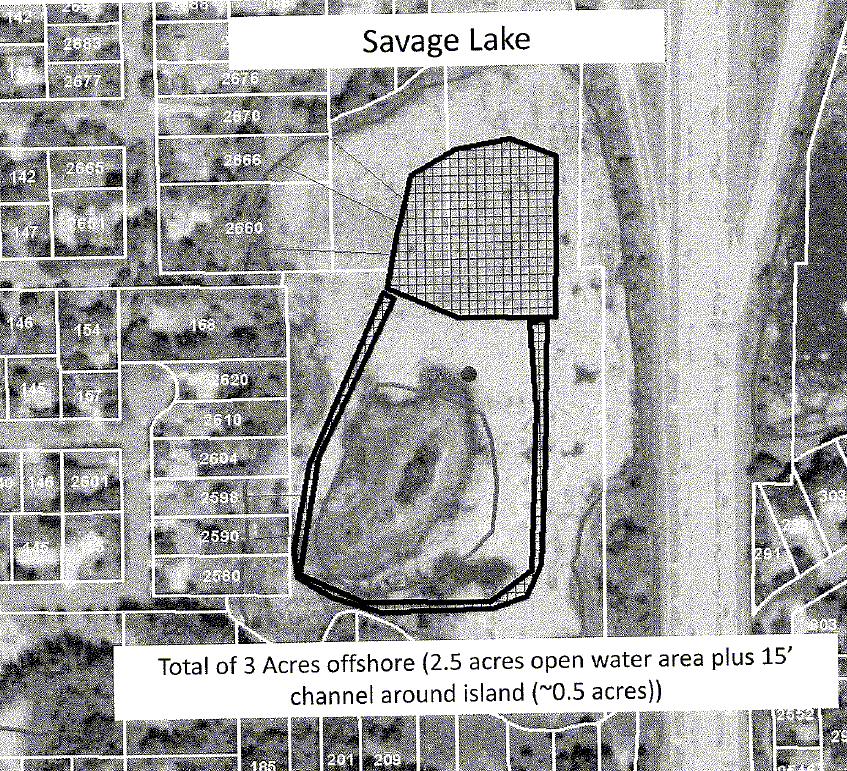 Joel received the approved "Permit to Destroy Aquatic Vegetation" from the DNR on Tuesday, the 10th. Mostly, our application was approved as submitted.
However, several lake shore homeowners will not be getting their channels to the cleared area because the DNR deemed those properties has having "NO REC USE." I don't know what that means, but I'll get more information from Joel this week and I'll let you know what I find out.
I think the end result is that those 15' channels to the open area will only be cleared for 7 of the 12 property owners who applied for relief from the lily infestation.
 I have a copy of the official DNR form, in PDF format, and if you would like a copy please email me through this blog or directly to my home email: twday60@comcast.net. A copy of the list of lake shore owners' and the result of their application is at right.
May 29, 2010
Plants and Alge
 In the June/July 2010 issue of the city's Newsletter & Recreational Guide, Le Petit Canadien, I saw that the city is concerned with the water quality in Round Lake. Due to the political clout of the groups in that area, the city has "constructed storm water ponds to treat water before it enters Round Lake" and other water management improvements. Unlike our neglected lake, the Ramsey-Washington Metro Watershed District (RWMWD) is carefully monitoring that lake water and attempting to control the lake's problems.
Our lake, especially the west side, is suffering total neglect from both the city and the Watershed District. Employees from the RWMWD occasionally enter Savage Lake from our property and take samples of something, but those results are not published or provided to residents. I admit that I'm unlikely to be impressed by the analysis of any agency incapable of measuring water levels with basic tools available to the average carpenter, but I'd appreciate knowing what they think they have found; even if I doubt the basis and capacity for their conclusions. We aren't even listed as a monitored resource on their website, although Round Lake is and it is substantially less of a lake than the combined Savage Lake areas.
 The east side of Savage Lake is considerably less damaged, since it isn't part of the freeway drainage system. However, lilies are starting to appear and the water quality is less than ideal. Other than water depth, I'm not sure what is protecting east Savage Lake from the worst of the plant invasions. Whatever it is, I wish we had some of it.
On a positive note, the starting spring water levels did some nice things for animal life. Painted turtles made a nice comeback in the lake. On one canoe outing, my grandkids and I spotted almost 50 turtles sunning themselves on logs around the shoreline. We also saw some large snapping turtles, one was approximately 20" from nose to tail and came up, twice, to check out my canoe paddle to see if it was edible. The lake was host to two pairs of common loons in early April, but they kept moving after a couple of days in our lake. For one evening, we hosted an off-course white pelican. Two pairs of geese had chicks about the time the temperate dropped and none survived. We lost a few mallard chicks from early hatching's at the same time. Currently, there are about a dozen wood duck chicks and a half-dozen mallard chicks trying to avoid the snappers. If you've ever seen a baby duck vanish from the group when a snapper pulls it under, you know what kind of challenge those parents are experiencing. We also have had a few hawks, herons, egrets, turkeys, lots of redwing blackbirds, cardinals, orioles, sparrows, swallows, and the usual winged culprits. A lot of our lakeshore neighbors have made their backyards into safe habitat for these birds and the animals are taking advantage of their hospitality.
 Earlier this spring, with above previous spring water levels in our lake, it looked like we might avoid the previous overwhelming infestations of lilies and other invasive plants. However, that cursed east side drain effectively and rapidly lowered the water levels and the lilies are about to take over the lake, again. Our water levels have dropped 4" last week and we've lost about 9" of water level since the end of the early April rains. At the peak, the water levels were still 5" short of historic levels (based on shoreline measurements from our beach) at the peak point, so we are currently 14" low and dropping. The drain is currently out of the loop, since the east side water level is about 4" below the overspill barrier.
Last year, the City Manager claimed he was polling lake residents for the permit to spray herbicides on the lilies. However, the two residents who volunteered (the previous year) to do the spraying were not asked to either give permission or to help with the polling of property owners, so I suspect we are so far off of the city's radar that we might as well be in Wisconsin.
The freeway is still draining into the west side of the lake, through the slope and drainage design of the freeway just south of the edge of the lake. Boat docks on the southeast side of the west lake have been pushed up and damaged by the sediment and that will only get worse without storm water sediment ponds similar to the ones constructed to protect Round Lake. Without some sort of organized resident action, I think it is safe to say this lake is doomed to become a mosquito-breeding swamp. This spring has been worse than usual, mosquito-wise, and I expect it will go downhill from here.
Our property values were significantly lowered due to the current economic depression (at least ours were) and it only makes sense that the destruction of the lake and the harmful and illegal noise levels our backyards are subjected to from the freeway "improvements" would lower them further. As beautiful and rare as the homes and backyards facing Savage Lake are, anyone with a lick of sense would avoid purchasing these properties for those critical property valuation reasons. I expect to see property values fall a lot further before this is over. The only rational time to show a home on Savage Lake is after midnight when the freeway traffic noise is moderate and buyers can't see the lake clearly.
 Last year, I distributed fliers to every house on the lake, informing residents of this website and the opportunity for lakeshore owners to form a property association to protect and promote our lake. I didn't pick up a single subscriber to the Savage Lake, Little Canada, Minnesota website and we totally went off of the City Council's radar for the entire year of 2009. If you are a Savage Lake resident and you have any insights on how we might reclaim this once-beautiful neighborhood resource, we'd appreciate your opinions.
Jul 1, 2008
June 25, 2008 City Council Meeting
The following is an exerpt from the city council's meeting notes. Obviously, some things are dramatically less detailed than what was presented in the meeting. A couple of things stand out from these meeting notes and past statements lake shore owners have heard:
1) The DNR and the Watershed District do not use science, historical records, or justifiable information in making decisions on issues like lake levels. A "finger in the wind" appears to be sufficient information for their pronouncements. If the DNR is the ultimate arbitrator of the lake level and they are not competent to perform that task, it appears that the city and state is practically daring property owners to challenge their decisions in court.
2) However, the buck is constantly being passed in this regard. The "lake," according to the council and the Watershed District, is not a lake, but a watershed. The DNR passes the buck back to the Watershed District, they pass it back to the DNR, and the city pretends their hands are washed of all responsibility.
3) The city is not aggressively investigating or monitoring lake pollution, if they have to be shown pictures of trash, clippings, and old tires before they decide to act on a citizen's complaint of business pollution in the city's lakes.
4) Claims such as "the Public Works Department’s use of salt and eliminating sand usage, coupled with better sweeping practices would go a long way toward water quality improvements" perfectly describes how little the city administration understands the concept of "water quality."
SAVAGE LAKE MEETING RECAP
McGraw recapped the Savage Lake meeting that was held on Tuesday, June 17, 2008 with residents in the Savage Lake drainage area. He noted that Cliff Aichinger, Ramsey-Washington Metro Watershed District did a very good job of presenting a lot of information. McGraw felt that the biggest issues the neighbors have are the high water mark for Savage Lake, how and when it was set, its impact on the lake, and the water lilies that have taken over the west side of the lake. McGraw indicated that most of the neighbors present want the water level raised and want the water lilies gone.
McGraw reported that Aichinger gave the property owners some encouragement on how to accomplish both through the DNR. Aichinger indicated that if that avenue was not successful, the City’s legislative representatives would need to get involved. McGraw pointed out that the treatment of the water lilies would be at the property owners’ expense. While the DNR has approved some treatment of the water lilies, McGraw felt that more was warranted given that there had never been water lilies on West Savage Lake in the past.
Blesener noted that Aichinger made it clear that Savage Lake is classified as a wetland and not a lake.
McGraw further reported that the Watershed does not test water quality of wetlands. However, they have done testing of Savage Lake and committed to continue to do testing. The result of the testing is that Savage Lake is not polluted.
McGraw reported that the issue of the School District dumping into the wetland system. It was determined that latex field paint was being dumped, which is not hazardous. The School District has been informed to cease this practice or they will be fined.
With regard to water quality, McGraw reported that discussions focused on treatment with the City Engineer recommending that rain water gardens be installed in the Savage Lake drainage area to provide treatment. It would not be possible to put a rain water garden at the end of the culvert that runs directly into the lake near the Day property, however. The City Engineer indicated that he would work with property owners in this drainage area to determine the level of interest in both having the gardens in yards as well as maintenance of the gardens. With regard to the culvert, it may be possible to install a system for collecting trash and debris before it gets into Savage Lake. This would have to be cleaned frequently to prevent blockage and flooding.
The City Administrator indicated that there are still roles that the City can plan relative to concerns about Savage Lake. He noted that the City is trying to get good historical information on the lake level. He pointed out that many people who live on Savage Lake have been there for many years and can provide information. The Administrator also pointed out the Watershed’s willingness to contact the DNR to request a re-evaluation of the ordinary high water mark. The Administrator noted that before an adjustment in that level would be possible, it is likely that a flood study will need to be done to determine if there would be any negative impacts as a result of higher water levels. He pointed out that one property owner on East Savage expressed opposition to having the water level raised. With regard to water lilies, the Watershed has indicated it will assist in working with the DNR on a more extensive eradication plan. The Administrator noted that the Watershed has indicated that property owners can request their Board to provide funding to help defray the costs.
McGraw felt that the property owners had a legitimate argument for the removal of the water lilies from Savage Lake given that at one time there were none on the lake. McGraw felt that if the property owners and the Watershed presented the information in an organized fashion, the argument for total removal of the water lilies would be stronger.
Keis asked about the street sweeping discussion, and asked if the City can justify the cost of a sweeper. The City Administrator felt the issue was not one of economic payback to the City, but rather issues of aesthetics and water quality. He noted that cities typically sweep three times per year. Little Canada has been sweeping only once per year, given timing issues with fall sweepings. The Administrator felt that the purchase of a sweeper should be looked into, noting that the City will get some additional LGA funds that could be used for the purchase. There are additional issues related to operating costs, and the Administrator suggested it may be possible to hire a person part-time to do sweeping. The other issue is what to do with the materials that are swept up. Under the contracting arrangement, the contractor must dispose of this material.
The Administrator felt that the Public Works Department’s use of salt and eliminating sand usage, coupled with better sweeping practices would go a long way toward water quality improvements. Additionally the installation of rain water gardens and collection of trash at catch basins will help the lakes. Further, the Watershed has indicated their assistance with the DNR relative to the Savage Lake water level and water lily eradication.
Montour felt that a lot of good things came out of the neighborhood meeting. He suggested that an action plan be put together so that it is clear who owns which tasks and establishes a timeline for when action items will be addressed. McGraw stated that it is his understanding that a Savage Lake Homeowners Association will be formed, which would take on tasks at hand with the assistance of the Watershed and the City.
The City Administrator indicated that he could put together an action plan, but noted that there will be a lot of variables depending on DNR reaction to raising the ordinary high water mark for Savage Lake as well as additional water lily removal. If the DNR does not support these actions, legislative action will be needed. Montour indicated that having a document outlining the action steps and responsibilities would be helpful.
Elvy Day, Lakeshore Avenue, indicated that it will take the cooperation of all parties working together to move forward on the issues. She thanked the City for any help they would provide.
Blesener pointed out that a lot will depend on the DNR, and it could be that they will not be supportive of raising the ordinary high water level or additional water lily removal. Day pointed out that there are other environmental groups that could be solicited for help.
Rocky Waite, Lakeshore Avenue, appeared before the Council to clarify a few issues from the last meetings. He indicated that when he brought the issue of the School District’s dumping into the storm sewer system, it was not latex field paint that he noticed, but another substance which appeared to be anti-freeze. The City Administrator indicated that the City did contact the School District on the occasions that Mr. Waite reported the dumping, but the substance was not tested. He further reported that the Watershed has contacted the School District to cease this practice, or they will be fined.
With regard to the Gopher Electronics property, Waite showed pictures of existing conditions. He indicated that the original building plans for this site call for a sediment pond, and noted that the pond has not existed for a number of years. The City Administrator reported that the pond was originally put in but has eroded out. He has talked to the property owner and is trying to get voluntary cooperation to clean up and repair this pond.
Waite pointed out that at the May 28th meeting Council Member Montour indicated that Gopher Electronics was not dumping into Savage Lake. Montour indicated that what he said was that Gopher Electronics was not dumping pollutants into the lake.
Waite presented pictures showing discarded old tires on the Gopher Electronics property as well as broken concrete and asphalt near the lake edge. He also showed piles of leaves dumped on this property. Waite contended that these materials would be considered pollutants. Waite indicated that he wanted to show that he did have documentation for the issues that he raised relative to Savage Lake.
Blesener indicated that the City will contact Gopher Electronics and request that they clean up their property.
Waite reported that in researching the ordinary high water level (OHW) for Savage Lake, he found that in 1964 when the freeway went through that level was at 899.5. Blesener pointed out that the OHW is currently at 895.1 as established by the DNR. Allan noted that the flood level is 896, and pointed out that an OHW of 899.1 would flood properties abutting Savage Lake.
Blesener indicated that he was in the back yards of the Freeman and Smith properties, and noted that the lake level is currently 18 inches below the top of the concrete wall in the Smith back yard. The water level is about 3 inches below the top of the weir. Blesener indicated that to raise the water level to 899.1 will put water in people’s basements on East Savage Lake. Blesener indicated that the Watershed discussed with the DNR as to how the OWH is determined, and they indicated that they look at the vegetation around the lake as well as historical water lines. The DNR indicated that it is their opinion that the OHW is within 3 inches of its historical levels.
Waite again indicated that the OHW was 899.1 in 1964. Allan pointed out that different base lines have been used over the years.
Waite referred to 1979 minutes in which Roy Nadeau referred to the high water level for Savage as the highest point in the freeway culvert. He indicated that that elevation is 899.2. Blesener again pointed out that an 899.1 elevation will flood some homes.
Keis stated that he could not prove whether Waite is right or wrong, but indicated that the bottom line is that the City does not determine the ordinary high water line. It is the DNR that makes this determination. Keis suggested that Waite bring his arguments to the DNR.
Waite stated that he wanted the City Council to provide support for this effort. McGraw pointed out that this is a difficult situation given the impact that an 899.1 elevation would have on East Savage Lake properties. McGraw indicated that he has lived in Little Canada since 1971 and reported that he has never seen the yards on East Savage Lake flooded. McGraw pointed out that while property owners may not like it, at some point it has to be accepted that it is the DNR that sets the OHW level.
Waite indicated that he has been researching the City’s records for the 1960’s and believes that it was the City that put in the gate system that managed the Savage Lake level. He noted that he found minutes in which comments were made by the then City Attorney relative to maintaining Savage Lake at its highest level and preventing the lake from becoming a swamp.
Allan pointed out that it will be up to the DNR hydrologist to determine if the 895.4 OHW level is appropriate. She pointed out, however, that an 899.1 level will not be approved as it will flood people’s backyards. Allan noted that there were people at the June 17th neighborhood meeting who oppose an increase in the OHW. Allan pointed out to Mr. Waite that it is apparent in looking at the lake that an increase of a foot will cause flooding.
Waite stated that he realizes an increase to 899.1 will not be approved, but felt that the lake could be raised by 1 ½ to 2 feet. Allan again indicated that the DNR will make the determination, and will likely do a flood study as part of their review. Allan again pointed out the impact to abutting properties.
Waite stated that he did not want to flood anyone out. He suggested another solution may be to cut off the pipe joining East and West Savage. That would allow the level of West Savage to be raised.
Blesener felt increasing the lake level 1 ½ feet will put water in people’s back yards. An increase of 4 feet will put water in basements.
The City Administrator stated that he would put the Savage Lake action plan together, outlining options as well as responsibilities.
1) The DNR and the Watershed District do not use science, historical records, or justifiable information in making decisions on issues like lake levels. A "finger in the wind" appears to be sufficient information for their pronouncements. If the DNR is the ultimate arbitrator of the lake level and they are not competent to perform that task, it appears that the city and state is practically daring property owners to challenge their decisions in court.
2) However, the buck is constantly being passed in this regard. The "lake," according to the council and the Watershed District, is not a lake, but a watershed. The DNR passes the buck back to the Watershed District, they pass it back to the DNR, and the city pretends their hands are washed of all responsibility.
3) The city is not aggressively investigating or monitoring lake pollution, if they have to be shown pictures of trash, clippings, and old tires before they decide to act on a citizen's complaint of business pollution in the city's lakes.
4) Claims such as "the Public Works Department’s use of salt and eliminating sand usage, coupled with better sweeping practices would go a long way toward water quality improvements" perfectly describes how little the city administration understands the concept of "water quality."
SAVAGE LAKE MEETING RECAP
McGraw recapped the Savage Lake meeting that was held on Tuesday, June 17, 2008 with residents in the Savage Lake drainage area. He noted that Cliff Aichinger, Ramsey-Washington Metro Watershed District did a very good job of presenting a lot of information. McGraw felt that the biggest issues the neighbors have are the high water mark for Savage Lake, how and when it was set, its impact on the lake, and the water lilies that have taken over the west side of the lake. McGraw indicated that most of the neighbors present want the water level raised and want the water lilies gone.
McGraw reported that Aichinger gave the property owners some encouragement on how to accomplish both through the DNR. Aichinger indicated that if that avenue was not successful, the City’s legislative representatives would need to get involved. McGraw pointed out that the treatment of the water lilies would be at the property owners’ expense. While the DNR has approved some treatment of the water lilies, McGraw felt that more was warranted given that there had never been water lilies on West Savage Lake in the past.
Blesener noted that Aichinger made it clear that Savage Lake is classified as a wetland and not a lake.
McGraw further reported that the Watershed does not test water quality of wetlands. However, they have done testing of Savage Lake and committed to continue to do testing. The result of the testing is that Savage Lake is not polluted.
McGraw reported that the issue of the School District dumping into the wetland system. It was determined that latex field paint was being dumped, which is not hazardous. The School District has been informed to cease this practice or they will be fined.
With regard to water quality, McGraw reported that discussions focused on treatment with the City Engineer recommending that rain water gardens be installed in the Savage Lake drainage area to provide treatment. It would not be possible to put a rain water garden at the end of the culvert that runs directly into the lake near the Day property, however. The City Engineer indicated that he would work with property owners in this drainage area to determine the level of interest in both having the gardens in yards as well as maintenance of the gardens. With regard to the culvert, it may be possible to install a system for collecting trash and debris before it gets into Savage Lake. This would have to be cleaned frequently to prevent blockage and flooding.
The City Administrator indicated that there are still roles that the City can plan relative to concerns about Savage Lake. He noted that the City is trying to get good historical information on the lake level. He pointed out that many people who live on Savage Lake have been there for many years and can provide information. The Administrator also pointed out the Watershed’s willingness to contact the DNR to request a re-evaluation of the ordinary high water mark. The Administrator noted that before an adjustment in that level would be possible, it is likely that a flood study will need to be done to determine if there would be any negative impacts as a result of higher water levels. He pointed out that one property owner on East Savage expressed opposition to having the water level raised. With regard to water lilies, the Watershed has indicated it will assist in working with the DNR on a more extensive eradication plan. The Administrator noted that the Watershed has indicated that property owners can request their Board to provide funding to help defray the costs.
McGraw felt that the property owners had a legitimate argument for the removal of the water lilies from Savage Lake given that at one time there were none on the lake. McGraw felt that if the property owners and the Watershed presented the information in an organized fashion, the argument for total removal of the water lilies would be stronger.
Keis asked about the street sweeping discussion, and asked if the City can justify the cost of a sweeper. The City Administrator felt the issue was not one of economic payback to the City, but rather issues of aesthetics and water quality. He noted that cities typically sweep three times per year. Little Canada has been sweeping only once per year, given timing issues with fall sweepings. The Administrator felt that the purchase of a sweeper should be looked into, noting that the City will get some additional LGA funds that could be used for the purchase. There are additional issues related to operating costs, and the Administrator suggested it may be possible to hire a person part-time to do sweeping. The other issue is what to do with the materials that are swept up. Under the contracting arrangement, the contractor must dispose of this material.
The Administrator felt that the Public Works Department’s use of salt and eliminating sand usage, coupled with better sweeping practices would go a long way toward water quality improvements. Additionally the installation of rain water gardens and collection of trash at catch basins will help the lakes. Further, the Watershed has indicated their assistance with the DNR relative to the Savage Lake water level and water lily eradication.
Montour felt that a lot of good things came out of the neighborhood meeting. He suggested that an action plan be put together so that it is clear who owns which tasks and establishes a timeline for when action items will be addressed. McGraw stated that it is his understanding that a Savage Lake Homeowners Association will be formed, which would take on tasks at hand with the assistance of the Watershed and the City.
The City Administrator indicated that he could put together an action plan, but noted that there will be a lot of variables depending on DNR reaction to raising the ordinary high water mark for Savage Lake as well as additional water lily removal. If the DNR does not support these actions, legislative action will be needed. Montour indicated that having a document outlining the action steps and responsibilities would be helpful.
Elvy Day, Lakeshore Avenue, indicated that it will take the cooperation of all parties working together to move forward on the issues. She thanked the City for any help they would provide.
Blesener pointed out that a lot will depend on the DNR, and it could be that they will not be supportive of raising the ordinary high water level or additional water lily removal. Day pointed out that there are other environmental groups that could be solicited for help.
Rocky Waite, Lakeshore Avenue, appeared before the Council to clarify a few issues from the last meetings. He indicated that when he brought the issue of the School District’s dumping into the storm sewer system, it was not latex field paint that he noticed, but another substance which appeared to be anti-freeze. The City Administrator indicated that the City did contact the School District on the occasions that Mr. Waite reported the dumping, but the substance was not tested. He further reported that the Watershed has contacted the School District to cease this practice, or they will be fined.
With regard to the Gopher Electronics property, Waite showed pictures of existing conditions. He indicated that the original building plans for this site call for a sediment pond, and noted that the pond has not existed for a number of years. The City Administrator reported that the pond was originally put in but has eroded out. He has talked to the property owner and is trying to get voluntary cooperation to clean up and repair this pond.
Waite pointed out that at the May 28th meeting Council Member Montour indicated that Gopher Electronics was not dumping into Savage Lake. Montour indicated that what he said was that Gopher Electronics was not dumping pollutants into the lake.
Waite presented pictures showing discarded old tires on the Gopher Electronics property as well as broken concrete and asphalt near the lake edge. He also showed piles of leaves dumped on this property. Waite contended that these materials would be considered pollutants. Waite indicated that he wanted to show that he did have documentation for the issues that he raised relative to Savage Lake.
Blesener indicated that the City will contact Gopher Electronics and request that they clean up their property.
Waite reported that in researching the ordinary high water level (OHW) for Savage Lake, he found that in 1964 when the freeway went through that level was at 899.5. Blesener pointed out that the OHW is currently at 895.1 as established by the DNR. Allan noted that the flood level is 896, and pointed out that an OHW of 899.1 would flood properties abutting Savage Lake.
Blesener indicated that he was in the back yards of the Freeman and Smith properties, and noted that the lake level is currently 18 inches below the top of the concrete wall in the Smith back yard. The water level is about 3 inches below the top of the weir. Blesener indicated that to raise the water level to 899.1 will put water in people’s basements on East Savage Lake. Blesener indicated that the Watershed discussed with the DNR as to how the OWH is determined, and they indicated that they look at the vegetation around the lake as well as historical water lines. The DNR indicated that it is their opinion that the OHW is within 3 inches of its historical levels.
Waite again indicated that the OHW was 899.1 in 1964. Allan pointed out that different base lines have been used over the years.
Waite referred to 1979 minutes in which Roy Nadeau referred to the high water level for Savage as the highest point in the freeway culvert. He indicated that that elevation is 899.2. Blesener again pointed out that an 899.1 elevation will flood some homes.
Keis stated that he could not prove whether Waite is right or wrong, but indicated that the bottom line is that the City does not determine the ordinary high water line. It is the DNR that makes this determination. Keis suggested that Waite bring his arguments to the DNR.
Waite stated that he wanted the City Council to provide support for this effort. McGraw pointed out that this is a difficult situation given the impact that an 899.1 elevation would have on East Savage Lake properties. McGraw indicated that he has lived in Little Canada since 1971 and reported that he has never seen the yards on East Savage Lake flooded. McGraw pointed out that while property owners may not like it, at some point it has to be accepted that it is the DNR that sets the OHW level.
Waite indicated that he has been researching the City’s records for the 1960’s and believes that it was the City that put in the gate system that managed the Savage Lake level. He noted that he found minutes in which comments were made by the then City Attorney relative to maintaining Savage Lake at its highest level and preventing the lake from becoming a swamp.
Allan pointed out that it will be up to the DNR hydrologist to determine if the 895.4 OHW level is appropriate. She pointed out, however, that an 899.1 level will not be approved as it will flood people’s backyards. Allan noted that there were people at the June 17th neighborhood meeting who oppose an increase in the OHW. Allan pointed out to Mr. Waite that it is apparent in looking at the lake that an increase of a foot will cause flooding.
Waite stated that he realizes an increase to 899.1 will not be approved, but felt that the lake could be raised by 1 ½ to 2 feet. Allan again indicated that the DNR will make the determination, and will likely do a flood study as part of their review. Allan again pointed out the impact to abutting properties.
Waite stated that he did not want to flood anyone out. He suggested another solution may be to cut off the pipe joining East and West Savage. That would allow the level of West Savage to be raised.
Blesener felt increasing the lake level 1 ½ feet will put water in people’s back yards. An increase of 4 feet will put water in basements.
The City Administrator stated that he would put the Savage Lake action plan together, outlining options as well as responsibilities.
Subscribe to:
Posts (Atom)